Femme Fatale Crime Novels: Classic Noir and Modern Picks
The essential femme fatale crime novels start with James M. Cain’s Double Indemnity and The Postman Always Rings Twice, Dashiell Hammett’s The Maltese Falcon and Raymond Chandler’s Farewell, My Lovely. For modern noir that plays with the same trope, E. L. Chase’s The Vanishing Mistress and No Exit for a Dead Man both put a woman at the center of the game, and it is never clear she is losing.
A note on disclosure: this site features its own authors’ books. The classics below are included because they define the trope, and they are described in general terms.
What is a femme fatale in crime fiction?
A femme fatale is a woman whose charm and intelligence pull the protagonist into danger, often toward a crime he would not have committed alone. In classic noir she is usually seen through the eyes of a man who wants her, which is part of the point: the reader only knows what he is willing to notice.
The trope has a mixed reputation. At its worst it blames a woman for a man’s bad choices. At its best it gives a crime story its most interesting character, someone with her own plan who is playing a longer game than anyone around her. The strongest femme fatale novels leave you wondering whether she was the villain, the victim or simply the only person in the book who saw the situation clearly.
Which classic noir novels define the femme fatale?
- Double Indemnity by James M. Cain. An insurance salesman and a married woman plan a murder for the payout. It is short, confessional and bleak.
- The Postman Always Rings Twice by James M. Cain. A drifter, a roadside diner and a woman who wants out of her marriage.
- The Maltese Falcon by Dashiell Hammett. Sam Spade and a client whose story changes every time she tells it.
- Farewell, My Lovely by Raymond Chandler. Philip Marlowe’s search for a missing woman leads through a city of lies.
- The Grifters by Jim Thompson. A small-time con man caught between two women who are better at the game than he is.
If you like these, our guide to noir books like Raymond Chandler goes further into the tradition.
Which E. L. Chase novels use the femme fatale trope?
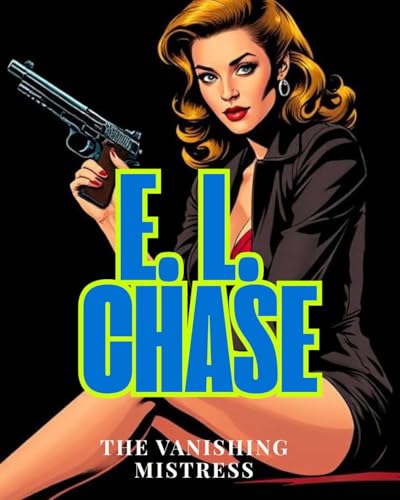
The Vanishing Mistress is the most direct fit and is tagged for femme fatale mysteries. Eddie Crane, an ex-cop turned private eye, is drawn into a stolen-drive, crime-lord game where everybody is a pawn or a predator. Rita keeps vanishing, and she keeps rearranging the pieces so nobody sees the full picture until it is too late. Rain, neon and coastal roads give it the classic PI mood.
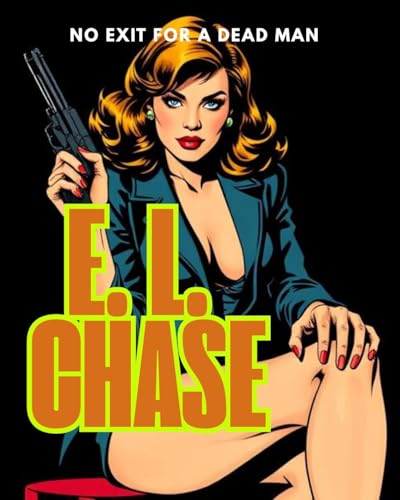
No Exit for a Dead Man turns the trope toward witness protection. Tommy, a desperate crook in debt, steals a flash drive holding crime boss Marcus Kane’s whole empire. Even under a new name he cannot outrun Kane’s people, a vengeful crew, or Lena, whose notes suggest she is still playing her game.
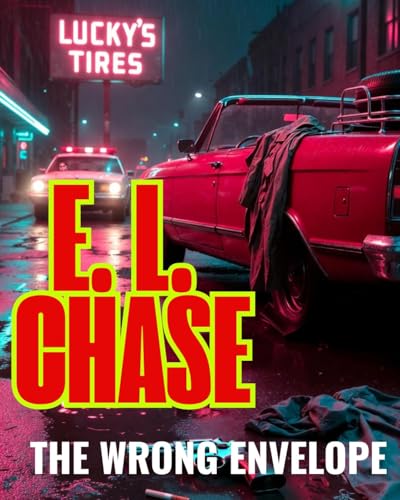
The Wrong Envelope uses a femme fatale inside a wrong-man, ticking-clock plot. Ray Collier grabs the wrong briefcase on the 6:15 from Grand Central and finds diamonds and a Polaroid of a dead girl. He has six hours, and across one long day he learns who his allies really are before a final twist lands.
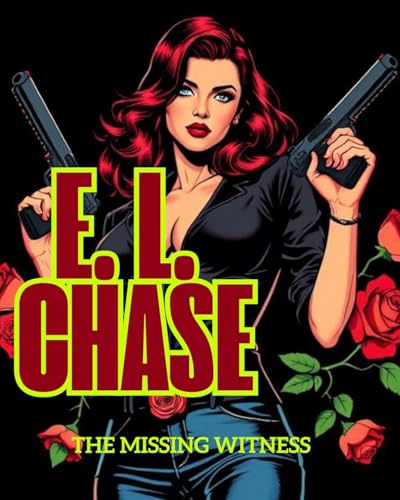
The Missing Witness is told in first-person hardboiled prose. Card-sharp Eddie Malone survives a junkyard blaze with a ledger that maps a syndicate’s payers and killers. Diana wants it too, and she may be more dangerous than the men chasing them.
How do these femme fatale novels compare?
| Novel | Protagonist | The woman at the center | Setup |
|---|---|---|---|
| Double Indemnity (Cain) | Insurance salesman | Married woman with a plan | Murder for a payout |
| The Maltese Falcon (Hammett) | Private detective | Client with shifting stories | Hunt for a statuette |
| The Vanishing Mistress | Ex-cop turned PI | Rita, who keeps vanishing | Stolen drive, crime lord |
| No Exit for a Dead Man | Crook in debt | Lena, still playing her game | Witness protection |
| The Wrong Envelope | Hungover commuter | Femme fatale (tagged) | Six-hour deadline |
| The Missing Witness | Card-sharp | Diana, a dangerous partner | Syndicate ledger |
Which one should I read first?
Start with The Vanishing Mistress if you want a private-eye story closest to Hammett and Chandler. Pick No Exit for a Dead Man if you prefer an on-the-run plot where the past keeps catching up. Choose The Wrong Envelope for a single-day chase with an ordinary man out of his depth; our guide to wrong man thrillers covers that trope in more depth. Go with The Missing Witness if you want a partnership where neither side fully trusts the other.
Is the femme fatale trope outdated?
It can be, when the woman exists only to lure the hero and then disappear. Modern crime fiction tends to give her a motive and an inner life, and many readers now enjoy the trope most when she is the smartest person in the room. When you read, notice whose version of events you are getting. A narrator who is attracted to someone is rarely a reliable judge of her, and good noir uses that gap to build suspense.
FAQ
What is the most famous femme fatale novel?
Double Indemnity and The Maltese Falcon are the titles most often cited, largely because of their famous film adaptations.
Are the E. L. Chase books on Kindle Unlimited?
Yes. The Vanishing Mistress, No Exit for a Dead Man, The Wrong Envelope and The Missing Witness are each Kindle eBooks on Amazon US and Amazon UK and are enrolled in Kindle Unlimited.
Do I need to read the High Velocity Crime series in order?
This guide knows of no required order. All four E. L. Chase titles here belong to the High Velocity Crime series, but nothing in the book descriptions says you must read one before another.
Is a femme fatale always the villain?
No. In the best examples her role is ambiguous. She may be manipulating the hero, protecting herself or simply surviving in a world run by dangerous men.
Find your next noir
Browse the full E. L. Chase catalog for more rain-soaked crime fiction.